The Architect's Take: Open Letter to Business Owners - Permitting for Special Use
Dear Small Business Owner,
Opening a brick-and-mortar business is a thrilling leap—full of vision, creativity, and the promise of community impact. Yet with high rewards come high stakes. The unfortunate truth is that wrong assumptions or poor planning in the early stages can spell failure for even the most passionate entrepreneurs. Many enthusiastic business owners “get overwhelmed by the totality of all the rules and requirements to get up and running,” facing what one study called a “death by a thousand cuts” in regulations. In fact, individual fees, permits, and delays often pile up so much that some run out of funds before ever reaching opening day. We at Catalyst Architecture have seen firsthand how misunderstandings in the permitting and design phase can shatter dreams. This open letter is our way of demystifying the process and empowering you through honest insight. We want your big idea to succeed as much as you do, and that means shining light on the less-exciting (but critical) steps needed to turn a key in your own front door.

The High Stakes of Getting It Right
Launching a new café, boutique, or multi-use venue isn’t just about signing a lease and setting up shop. It’s about avoiding pitfalls that could quietly undermine your venture from day one. Consider that entrepreneurs often face a nightmare of local “red tape” in three interrelated areas: costs, delays, and complexity. At first, each permit fee or code requirement might seem manageable. But those steps add up quickly, draining time and money. For example, a recent analysis found that in some cities, opening a small restaurant legally can require over a dozen separate approvals and fees totaling well over $5,000 (and north of $20,000 in tougher jurisdictions!). More daunting than the price tag, however, is the cost of time. Every month spent navigating permits is a month paying rent on a space that isn’t earning you revenue. Rent, utilities, insurance—these bills don’t pause while you wait on inspectors. One of the biggest financial hazards is exactly that: losing precious months to back-and-forth permitting bureaucracy, all while expenses accrue and your doors stay shut. It’s tragic but common to see hopeful owners sign a lease assuming they’ll open in 6 weeks, only to hit a permitting wall that pushes opening day six months out. Those extra months can consume a fledgling business’s startup capital and morale. Simply put, the stakes are high and the margin for error is thin. You deserve to know where the traps are before you stumble into them.
Layers of Complexity Beneath the Passion
What makes permitting so complex? In short: there are many layers, and missing even one can derail your timeline. Imagine peeling an onion of regulations: zoning laws, building codes, fire safety rules, health department requirements, accessibility standards (ADA), historical preservation rules, and more. At the outset, it’s easy to see the top layer (“Sure, the space is zoned commercial, so I’m good to open my bakery”). But once you start peeling back layers for a specific site, things become complex and highly specific. For example, zoning might allow a restaurant, but does it require a Special Use Permit for late-night operation or alcohol sales? Will a change of use from the previous tenant trigger new parking requirements or an expensive sprinkler system upgrade? (Often, changing a building’s use or occupancy means you must bring the entire space up to today’s codes – no “grandfathering” allowed.) It’s not uncommon that changing the use of a space requires costly upgrades, like installing an automatic fire sprinkler and alarm system. And yes, that applies even if the old occupant didn’t have those safety features – you will have to add them for your new café or gallery. On top of that, consider accessibility: older buildings may need new ramps, lifts, or restroom updates to comply with ADA standards when you renovate or change use. Overlooking this can not only delay your permit but also invite legal trouble down the road.
Behind each of these layers are sub-layers: the building code itself is a maze of structural, electrical, plumbing, HVAC, and life-safety requirements. A simple idea like “add a commercial kitchen” unfolds into fire suppression rules, ventilation specs, grease trap and health code rules, etc. If the property is in a historic district or near sensitive areas (schools, floodplains, etc.), further reviews and studies might be mandated. And crucially, every layer takes time. Plans often must be reviewed by different departments (planning, building, fire, health), sometimes sequentially rather than all at once. It’s common for entrepreneurs to find that getting all the necessary paperwork “can take months, or even more than a year, if each agency’s timeline slips”. There’s also a human factor: inconsistent guidance. One city inspector might approve a detail that a second inspector flags as a violation later. Such inconsistencies mean you could be told to redo work you thought was finished, adding surprise delays. No wonder new owners often feel blindsided—what started as a passion project can quickly turn into a morass of meetings, forms, and technical jargon.
A “Building Permit Issued” notice on a project site. Securing this yellow approval card is a triumph of planning, design, and compliance. Each permit represents numerous behind-the-scenes checks for zoning, code, fire safety, and more – often taking months of coordination.
When Passion Meets Reality: Bridging the Gap
It’s easy to see how the romance of starting a business can clash with the reality of permitting and design. You fell in love with roasting coffee, brewing beer, or curating vintage clothes – not with deciphering municipal code! At Catalyst, we often meet clients after they’ve gotten an rude awakening. For instance, one proprietor planned to convert a charming early-1900s commercial building into a short-term rental hub. Plans were drawn and contractors hired – but then everything stalled due to major life-safety code issues they hadn’t anticipated. The owner was baffled why progress stopped. We stepped in and the first thing we did was perform a comprehensive feasibility study (essentially a deep code and zoning analysis) that should have been done initially. Yes, it felt like going backward to the client at first. But once we laid out the zoning parameters, fire separation requirements, and a clear code path forward, the project suddenly made sense and was able to move ahead smoothly. This story is all too common: the excitement of design or build-out can make it tempting to “wing it” on the technicalities, but that approach often ends in frustration. The better path is to integrate the less glamorous work of due diligence into your project from the start.
Think of it this way: your passion is the fuel, and solid permitting strategy is the map. Without a map, even a full tank of gas can’t guarantee you won’t get lost. We encourage every business founder to pause and ask early on: Do I fully understand what permits and reviews my project will need? If not, get those answers before signing that lease or ordering equipment. That’s where a partner like Catalyst comes in. As architects, we don’t just design beautiful spaces—we coordinate with city officials, engineers, fire marshals, and inspectors to ensure your project stays aligned with all permitting requirements from the start. Often this means facilitating pre-application meetings, resolving zoning conflicts, or flagging structural code constraints early. Passion will get you through long nights and tough decisions, but it needs to be paired with knowledge and a team who knows how to navigate the system. Permits and codes aren’t there to snuff out your dream—they’re there to ensure your dream can stand up, safely and successfully. And with Catalyst guiding that process, you won’t be navigating it alone.
Hard Lessons: A Cautionary Scenario in Permitting for Special Use
To illustrate how overlooked complexities can impact a business, let’s walk through a scenario we’ve seen variations of: A young couple excitedly opens a cozy restaurant on a ground floor of a two-story building. They plan everything – menu, décor, marketing – and they do pull their basic restaurant permits for the space. Business is good… until a year later when the building’s owner decides to convert the empty offices above into residential lofts (a change requiring a special use permit and structural modifications). Suddenly, the restaurant owners get hit with bad news: to meet the new codes for the upstairs renovation, the entire building’s roof will be removed and rebuilt with upgraded fireproofing and utilities. This means their restaurant must shut down for four months during construction. Four months of zero income, continued rent, and a halted momentum that many small eateries never recover from. Could anyone have foreseen this? Possibly not the specific issue – but it’s a stark reminder that multi-use buildings are systems. If one part changes, it can affect the whole. An experienced architect or planner might have spotted early on that the building’s second floor was underutilized and likely to be redeveloped, or that the building didn’t have adequate structural capacity for added uses, implying future disruption. With that insight, the restaurateurs could have negotiated protections in their lease or even chosen a different location.
The lesson: failing to anticipate “above and beyond” scenarios can cost you dearly. Even without a landlord’s curveball, many businesses inadvertently create their own delays. We’ve seen a tenant sign a lease, then discover the “perfect spot” wasn’t zoned for their type of business – cue an expensive rezoning or special use permit application with months of hearings. Others start demo work inside without realizing they needed a permit for that too, only to be hit with a stop-work order and fines. Every delay means lost revenue that you can’t get back. It pays to do the homework up front, or better yet, have a professional guide you through it.
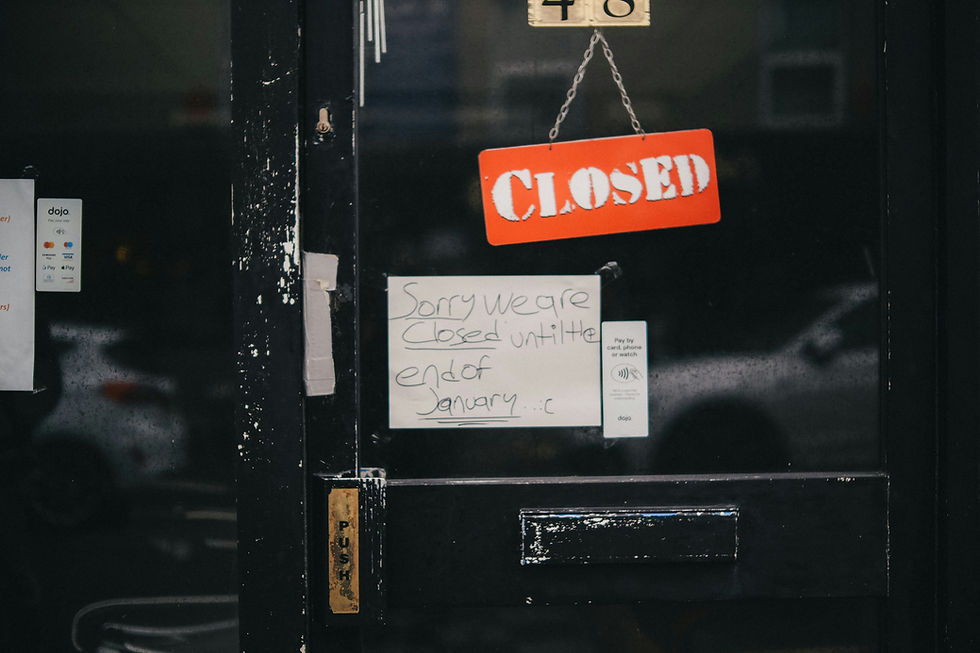
A vivid warning: “Temporarily Closed for Construction.” Every month of unexpected closure is a month of lost income and mounting costs. Proper planning aims to minimize surprise shutdowns like this by foreseeing structural or code upgrades that might interrupt operations.
Navigating the Process with the Right Partner
If all of this sounds overwhelming, take heart: you don’t have to navigate it alone. The smartest entrepreneurs know when to seek mentorship or professional guidance. In the same way you might hire an attorney to review a contract, engaging an architect or experienced permit consultant at the project outset can save untold grief. Even fire authorities advise “engaging a licensed design professional” to help identify requirements and coordinate the plan review and approval process for a change of use. In our practice at Catalyst Architecture, we start every project with a feasibility study for exactly this reason. It’s a deep dive into what the jurisdiction will require – covering zoning, building codes, site constraints, and more. We map out the “green lights,” “yellow lights,” and “red flags” so there are fewer surprises later. By integrating this step, we educate our clients on why certain constraints (like occupancy limits or egress routes) matter for their vision. It transforms a daunting checklist of regulations into a plan of action that makes sense.
Most importantly, having a knowledgeable guide empowers you as a business owner. It turns unknown risks into manageable tasks. With guidance, you’ll know if you need to budget three months or nine months for permits, or if that old building you love will require a full seismic retrofit (yikes, but better to know upfront!). A seasoned professional can propose creative solutions too—like phasing a project, seeking code variances, or using alternate materials—to keep your design intact while satisfying the inspectors. This honest, solutions-oriented approach is core to the Catalyst philosophy. We believe visionary, design-forward ideas can thrive when they’re built on a foundation of real-world insight and honesty. So ask questions. Lean on experts who have done this before. Many cities have small business development centers or volunteer mentors (through organizations like SCORE) who can point you in the right direction at little or no cost.
In closing, remember that every iconic shop or beloved café in your community had to cross this permitting bridge. It’s a rite of passage, not a barrier meant to break you. With eyes open and the right team at your side, you can turn the maze into a manageable path. Your passion got you here; our insight can help get you to opening day and far beyond.
Sincerely,The Catalyst Architecture Team